Dragonfly
Opening Context
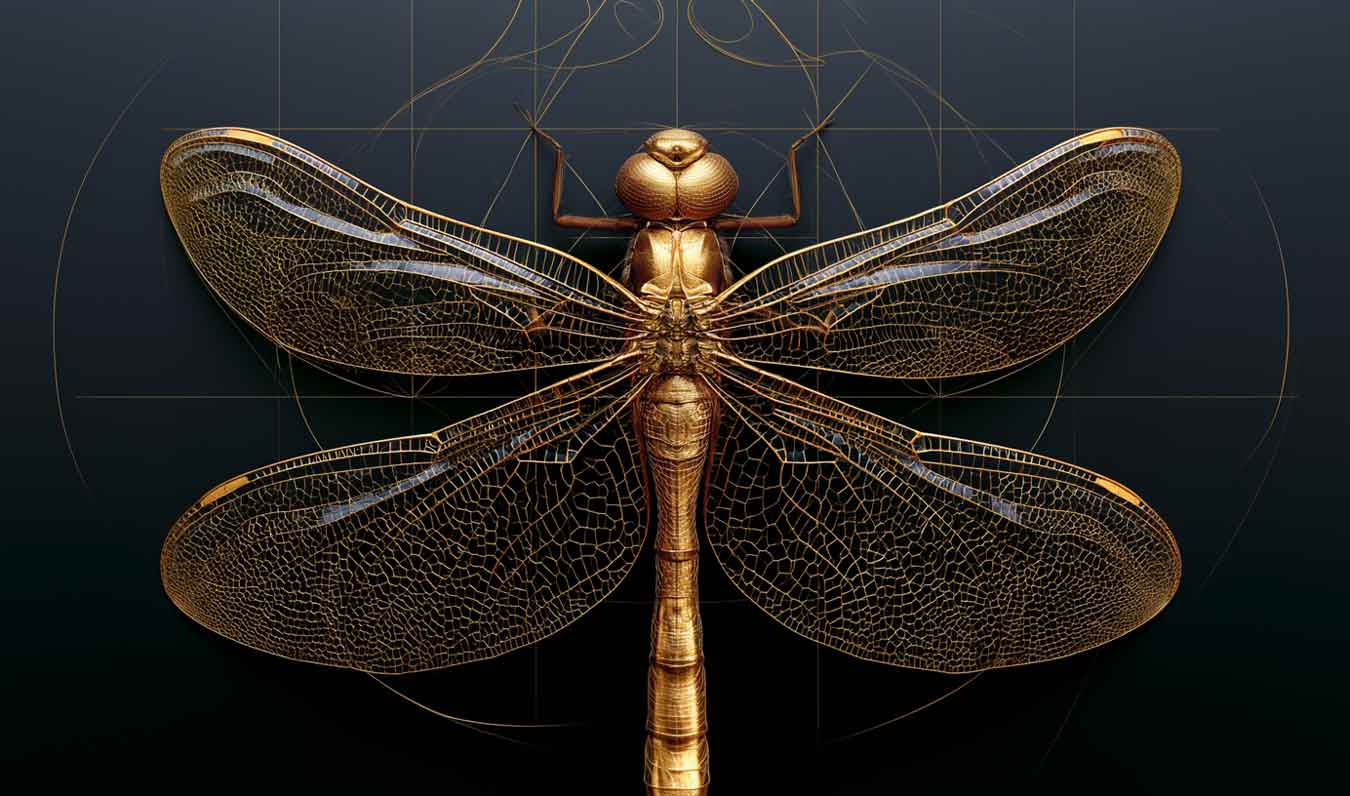
There are forms that command attention through size, and others through strength. The dragonfly does neither, instead it rearranges the space around attention itself. Its movement seems less like travel than immediate decision.
No hesitation, no excess, no wasted motion. Every correction becomes part of the original path. It has lived on Earth for more than 300 million years—long before flowering plants, long before birds learned flight. It remains one of evolution's most refined expressions of aerial intelligence. The dragonfly does not conquer gravity, it converses with it.
Observation
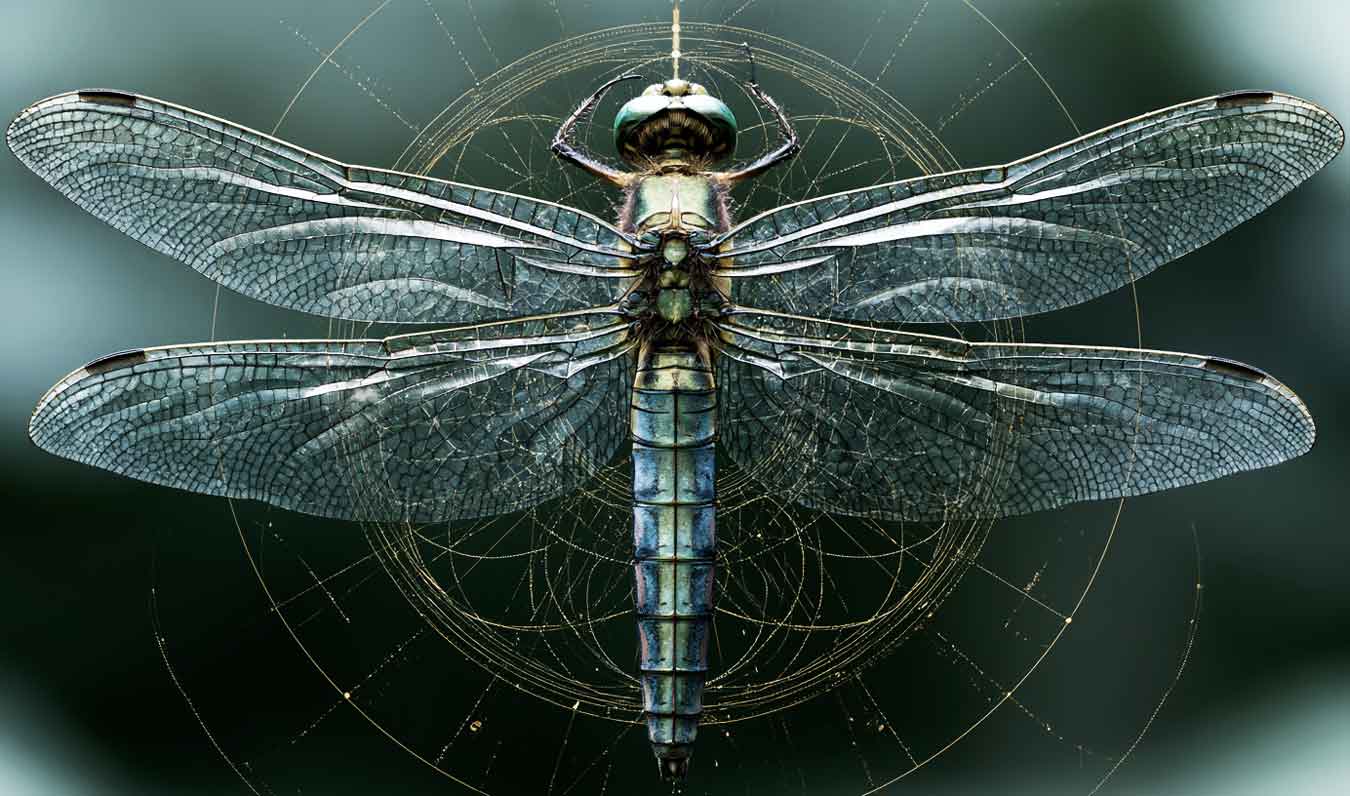
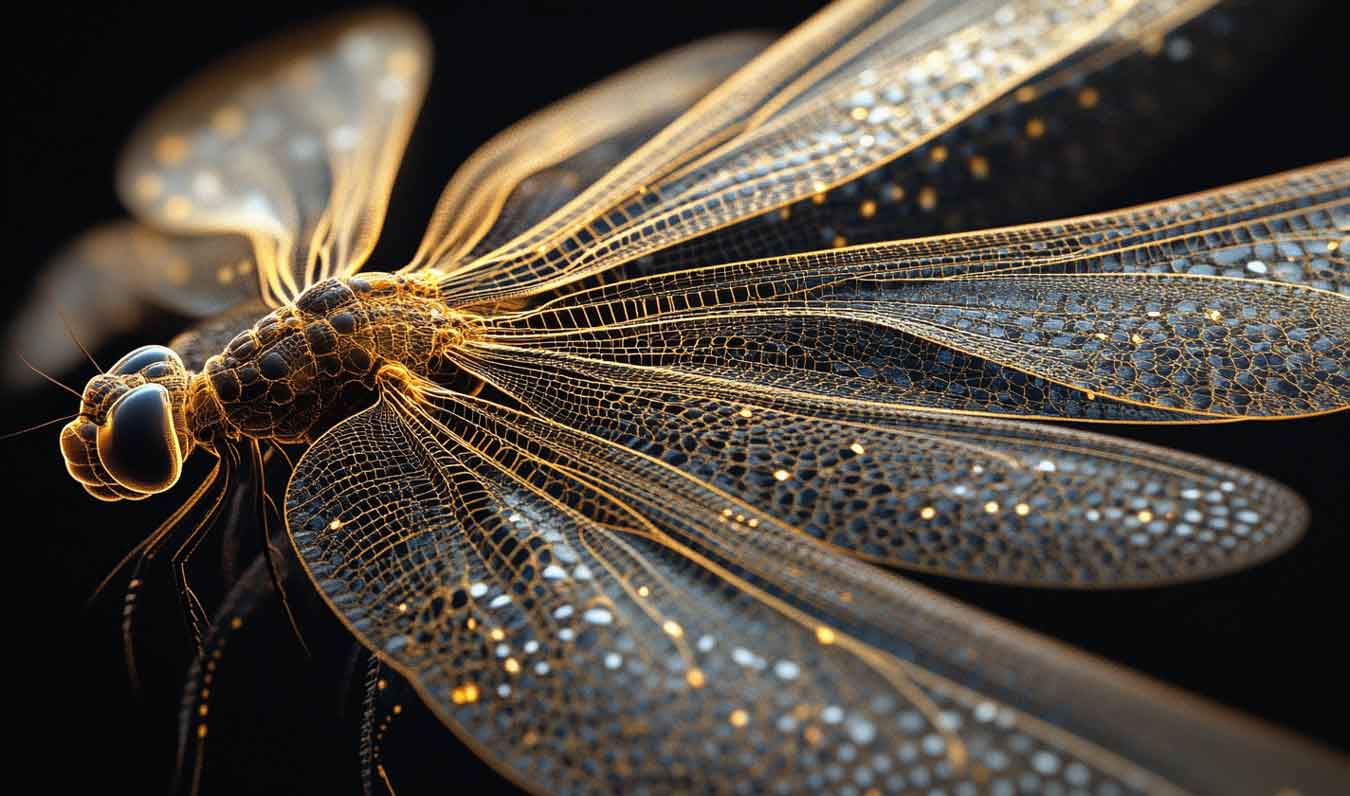
The dragonfly can move forward, backward, sideways, upward, downward, and hover nearly motionless. Each wing operates independently. Vision approaches nearly three hundred and sixty degrees. It sees almost everything while remaining committed to a single movement. Efficiency emerges not from force—but from extraordinary coordination.
Field Observation Prompt: Today notice one moment where a small adjustment changes an entire outcome. Collect these moments, they reveal the geometry of intelligent adaptation.
Pattern Manifestations
- Threshold Living: Dragonflies spend their early life underwater before emerging into aerial adulthood.
- Distributed Flight: Each wing can move independently, allowing continuous adjustment during flight.
- Ancient Persistence: The dragonfly's body plan has remained remarkably effective for hundreds of millions of years.
Pattern Fragments

Refinement as Transformation
This transmission explores the possibility that transformation is not always dramatic, disruptive, or forceful. Sometimes it appears as increasing coherence—where perception expands, unnecessary effort dissolves, and movement becomes more precise through relationship with the whole system.
It demonstrates that mastery is less about becoming something entirely new than allowing existing capacities to align into a more elegant expression.
Structural Principles
Refinement exceeds accumulation. Evolution often improves systems by simplifying rather than endlessly adding complexity.
Hidden development shapes visible expression. The longest developmental phases frequently occur before outward transformation becomes apparent.
Adaptability emerges from responsiveness. Rigid systems resist change. Responsive systems participate in it.
Human Resonance
Modern life often mistakes speed for urgency. The dragonfly suggests another possibility.
- Move quickly—without becoming hurried.
- Remain responsive—without becoming reactive.
- Hold a wide field of awareness—while acting with remarkable specificity.
The nervous system becomes calmer not by slowing every action, but by removing unnecessary movement. Precision creates its own peace.
Closing
The dragonfly reminds us that mastery often becomes lighter with refinement. The novice pushes, the expert aligns.
- Recorded during a season of creative consolidation, before the emergence of the next creative cycle.
- Earth Cycle 2026.07