Raccoon
Opening Context
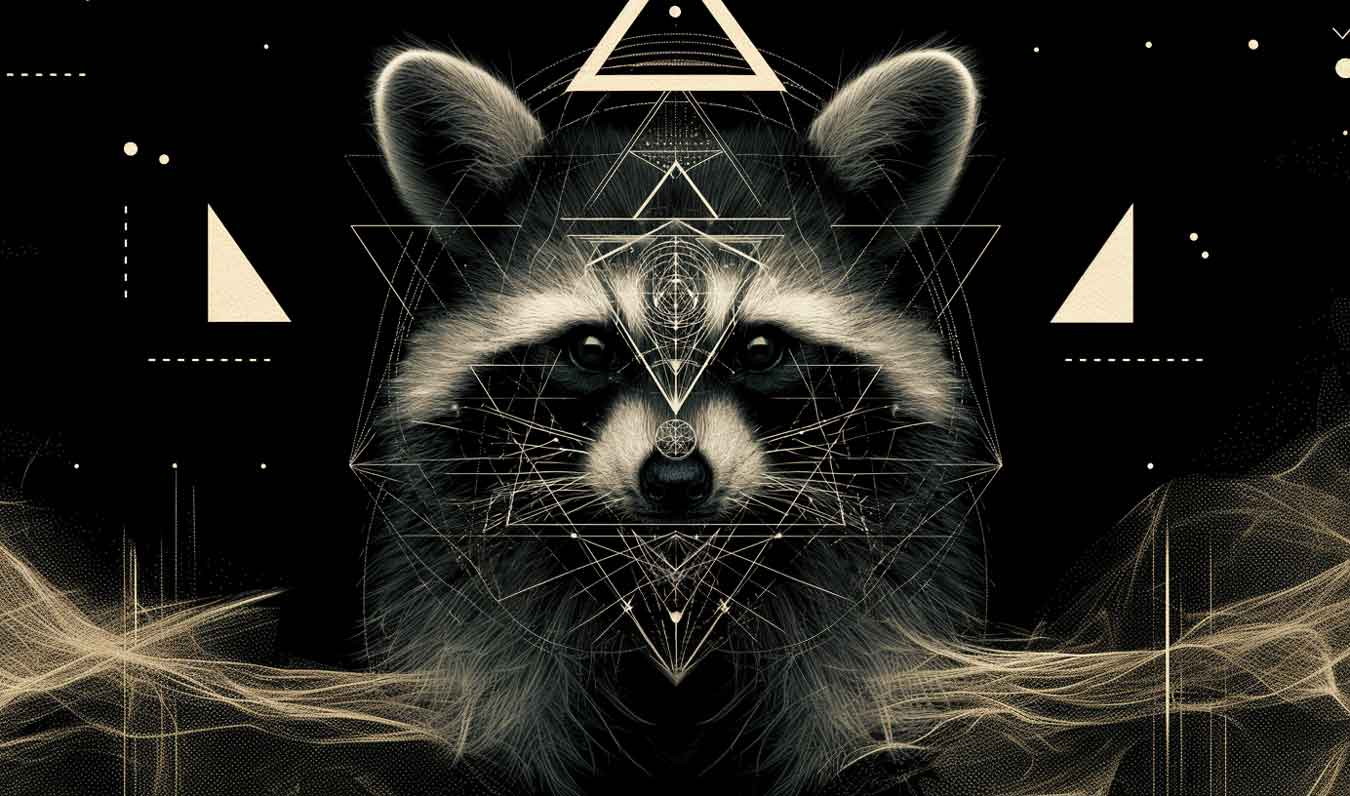
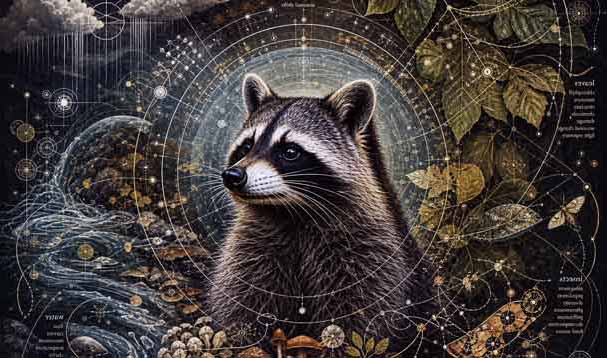
Among forests, rivers, suburban edges, forgotten structures, and human settlements, the raccoon occupies a rare ecological position: neither fully wild nor fully integrated into human systems. It is a boundary navigator. Where other creatures avoid complexity, the raccoon investigates it. Where obstacles emerge, it experiments. Where pathways close, it discovers another entrance.
The raccoon survives not through dominance, speed, or strength, but through relentless adaptability and exploratory intelligence. Its life is an ongoing conversation with uncertainty.
Core Signal
Resourcefulness is an evolutionary force. The raccoon demonstrates that survival is not always achieved through power. Sometimes persistence emerges through flexibility, intelligence appears as experimentation, and success belongs to the creature willing to investigate what others ignore. The raccoon reminds us that adaptation often begins as curiosity.
Pattern Fragments
The Masked Cartographer of Hidden Pathways
- The Hands Before the Eyes: The raccoon often learns through touch before certainty emerges through sight.
- The Urban Forager: The raccoon discovers pathways within environments designed by another species.
- The Edge Walker: Neither forest creature nor city creature, the raccoon thrives between categories.
Pattern Fragments

Human Resonance
The raccoon appears in us whenever we:
- Experiment with unfamiliar tools or navigate changing environments
- Learn through exploration rather than instruction or refuse to become trapped by rigid identities
- Build solutions from available resources or find opportunities hidden within complexity
Expressions
- Environmental Investigation: Constant exploration of surroundings for opportunity, access points, and resources.
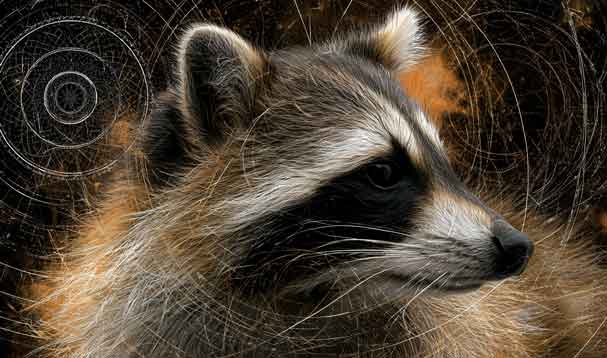
- Tactile Intelligence: The use of highly sensitive forepaws to gather information and manipulate objects.
- Improvisational Problem Solving: Responding creatively to changing conditions rather than relying on fixed behaviors.
Closing Mark
Raccoon embodies the intelligence of adaptive exploration within changing worlds.
- Recorded at the boundary between familiarity and discovery.
- Earth Cycle 2026.05