Pollen Particulate
Introduction
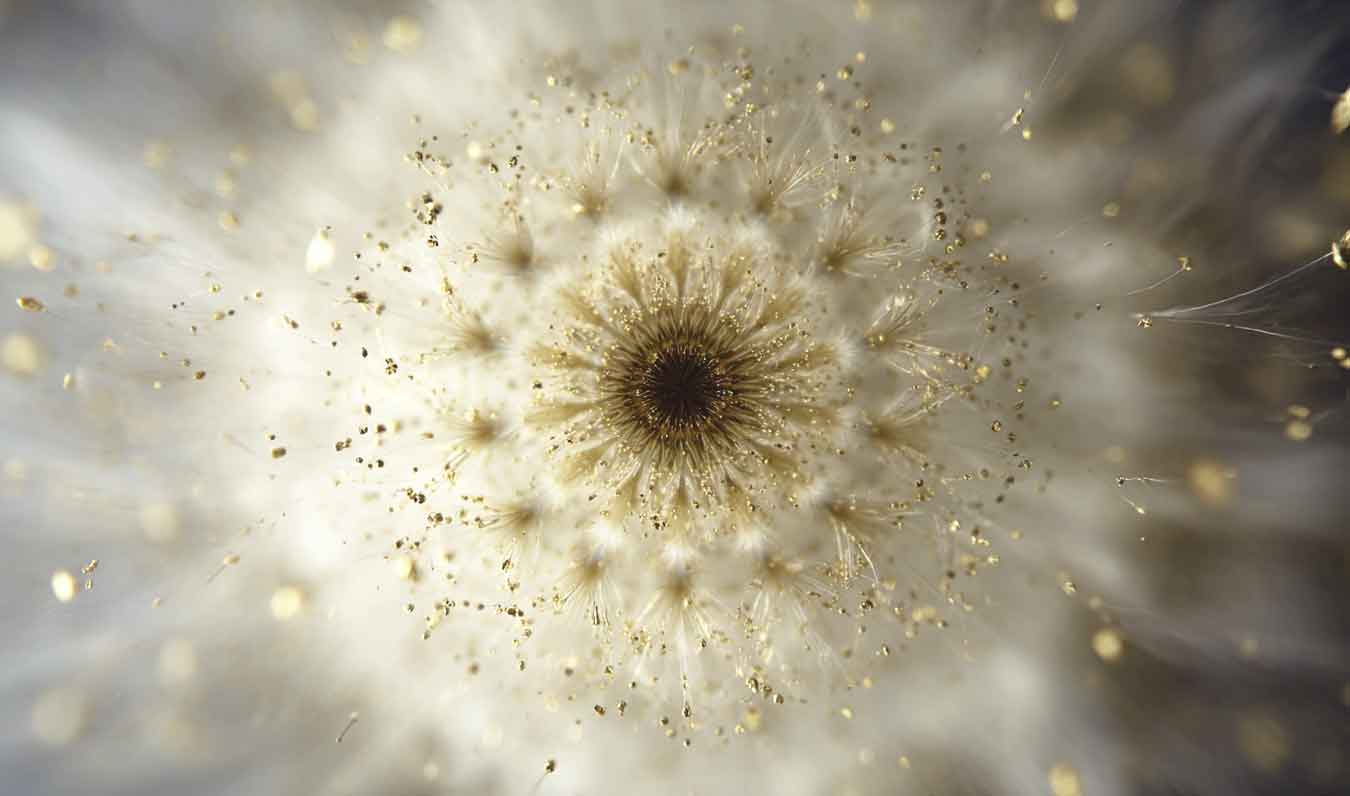
Spring releases its smallest architects into the air—unseen carriers of continuity. Pollen does not seek permission; it disperses.
Opening Context
April air becomes saturated with latent futures. Surfaces collect a fine dusting of possibility, including cars, leaves, skin, water. Reproduction is no longer rooted, it becomes atmospheric.
Entire forests participate in unseen exchange. The season shifts from containment toward dispersal, where continuity depends less on protection and more on circulation. What appears chaotic is often a highly evolved distribution strategy.
Core Concept
This field explores distributed reproduction systems—biological strategies where propagation occurs through diffusion rather than direct placement.
Pollen demonstrates that replication does not require centralized control. Instead, viability emerges through scale, probability, and environmental partnership. Wind becomes collaborator, distance becomes opportunity.
Signature Identifier: Expansion through dispersion rather than containment.
Pattern Fragments
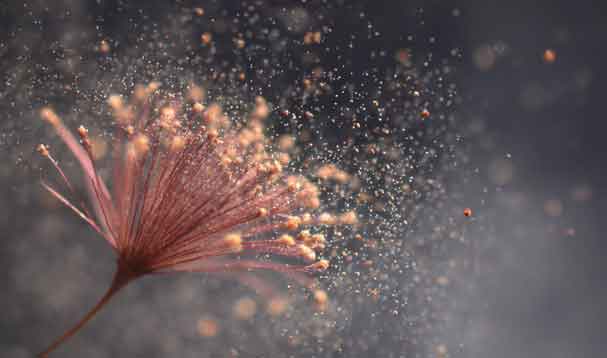
The imagery should feel simultaneously biological and cosmic, like fine particulate drifting as spores, stars, ash, or coded information.
- Aerosol dispersion fields - clouds of shimmering particulate drifting through atmospheric space and catching sunlight
- Stochastic distribution and probabilistic landing zones - wind currents visualized as flowing vector lines carrying particles, surfaces slowly accumulating fine dust layers
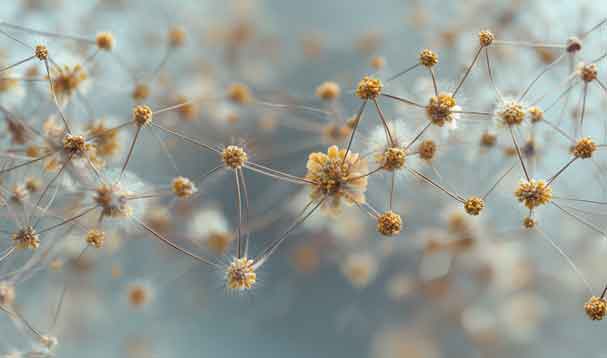
- Adhesion geometries - macro structures of pollen grains with textured spikes, hooks, lattices, microscopic armor, and alien-like symmetry

Intention: To reveal reproduction as a decentralized intelligence—less like planting, more like scattering signal into receptive space.
Process Insight
Distribution increases resilience. By relinquishing precision, systems gain reach.
- Systems designed for wide dispersal sacrifice precision for resilience.
- What appears random often conceals highly optimized environmental adaptation.
- Reproduction succeeds not through force, but through saturation and repetition.
Closing Mark
Not all growth begins with intention, some begins with surrender to movement.
- Recorded beneath oak bloom during mid-April wind movement.
- Earth Cycle: 2026.04